
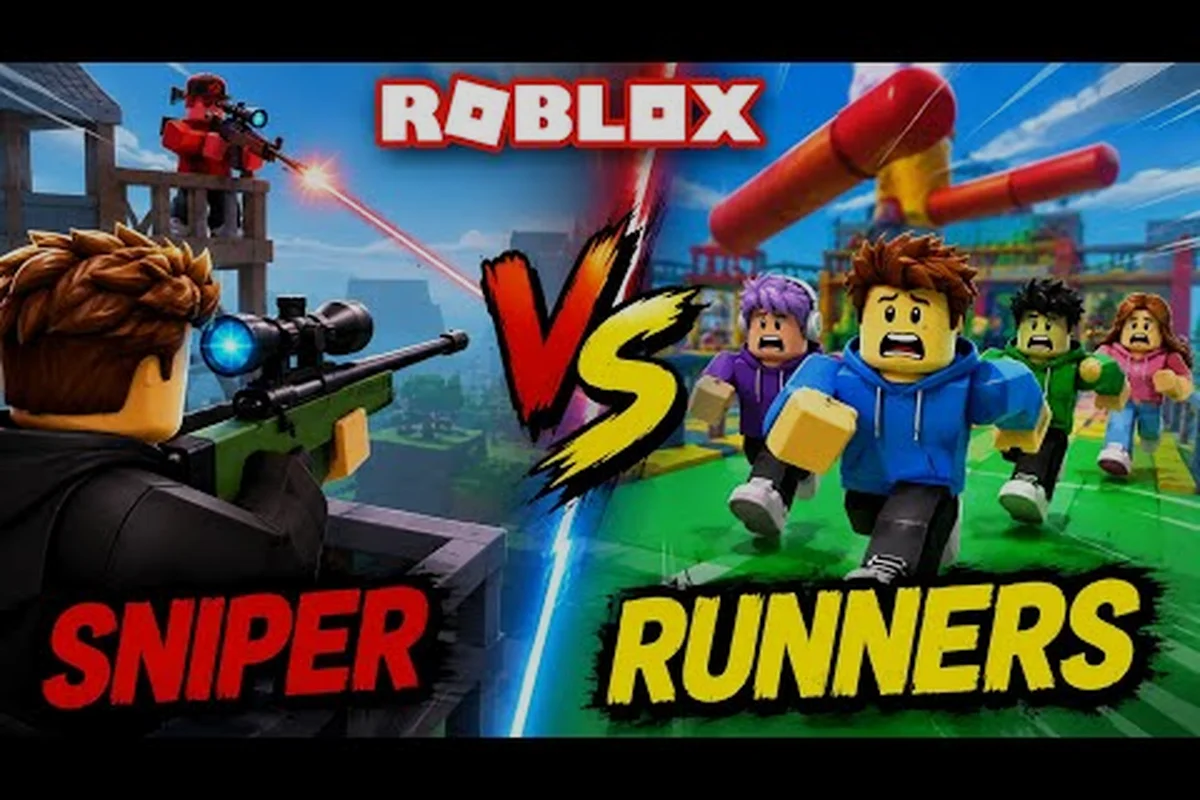
Getting caught in the open is the fastest way to lose a round, which is why this snipers vs runners runner guide focuses on the three abilities that keep you alive: speed burst, smoke, and shield. The runner role is all about reading sightlines, timing your cooldowns, and committing to a route at the right moment. Whether you are learning how to play runner for the first time or you have already logged dozens of matches, understanding when to burn each ability separates a clean finish-line run from a respawn screen. The game, created by STOCK STUDIOS INC. and available on Roblox, has drawn over 3.96 million visits since its May 2026 launch, and the runner side of the match is where most of the tension lives.
The core loop is simple: runners sprint across an open course while a sniper holds elevated sightlines and picks off anyone who strays into the open. Because the sniper can one-shot you from across the map, the entire runner role revolves around ability management and route discipline. This guide breaks down the three core runner abilities, how they interact with map geometry, and the exact decision-making process you need to reach the finish line consistently. You will also find practical loadout recommendations, cooldown math, and a few advanced tricks that experienced players use to bait shots and create openings for the rest of the team.
The Runner Role: Understanding Your Objective and Movement Priorities
The runner role is deceptively simple on paper: cross the map, hit the checkpoints, and reach the finish line before the sniper deletes you. In practice, the role demands constant awareness of where the sniper is looking, which lanes are currently safe, and whether your abilities are off cooldown. According to community reports from the official Roblox game page, the sniper sits in the middle of the map with vertical sightlines over most of the course, which means you are almost never truly hidden. The key is to move in bursts, use cover intelligently, and force the sniper to miss shots rather than trying to avoid being seen altogether.
Your movement priorities shift depending on the phase of the round. At the start, everyone spreads out to avoid clustering, because a single sniper shot can hit multiple runners if they line up. Mid-round, you need to balance progress against safety, especially when crossing open stretches that have no cover. Late-round, the finish line becomes the only thing that matters, and that is when most runners waste their abilities too early. A disciplined approach to the runner role means holding your speed burst until you actually need it, not popping it the moment the round starts.
Reading Sniper Sightlines and Timing Your Push
The sniper can only look in one direction at a time, which creates natural windows of opportunity. When the sniper is focused on the left side of the map, the right side becomes temporarily safer, and good runners learn to read these patterns. Watch the sniper's tracers and reload animations, because every shot gives you a short window to move. A sniper who just fired and missed has to cycle the bolt before the next shot, which is your cue to sprint across an exposed gap.
Checkpoint Discipline: Why Skipping Checkpoints Is a Trap
Checkpoints serve two purposes: they mark progress and they give you a brief moment of safety. Some runners try to skip checkpoints to save time, but this usually backfires because the sniper knows exactly where the checkpoints are and will pre-aim those lanes. Touching a checkpoint also resets your momentum in a way that lets you re-evaluate the next segment. The best runners treat checkpoints as decision points, not just progress markers, and they use those brief pauses to check the sniper's position before committing to the next lane.
Runner Abilities Explained: Speed Burst, Smoke, and Shield
The three runner abilities form the core of your survival toolkit, and each one serves a different purpose. The speed burst gives you a short burst of movement speed, which is ideal for crossing open gaps or closing distance to the next piece of cover. The smoke ability deploys a screen that blocks the sniper's line of sight, giving you and your teammates a safe corridor to move through. The shield ability creates a temporary barrier that can absorb a sniper shot, which is invaluable when you have no other option but to cross an exposed lane.
| Ability | Primary Use | Cooldown | Best Timing |
|---|---|---|---|
| Speed Burst | Cross open gaps, close distance | Short | Save for exposed stretches |
| Smoke | Block sightlines, create safe corridors | Medium | Use before crossing known sniper lanes |
| Shield | Absorb one sniper shot | Long | Emergency use when caught in the open |
Each ability has a distinct cooldown, and managing those cooldowns is the real skill of the runner role. The speed burst recharges quickly, so you can afford to use it more liberally. The smoke takes longer to recharge, which means you need to use it at high-value moments rather than wasting it on short gaps. The shield has the longest cooldown, so you should treat it as your emergency button, not something you pop casually.
Speed Burst: The Art of Timing Your Sprint
The speed burst is your most flexible tool because it works in almost every situation. Use it to cross a gap that the sniper is currently watching, to close distance on a teammate who is about to get shot, or to make yourself a harder target while moving in a straight line. The key is to activate it at the moment you commit to a lane, not before, because the burst lasts only a few seconds and you want maximum value from it.
Smoke: Creating Safe Corridors for the Whole Team
The smoke ability is arguably the most valuable team tool in the runner kit, because it protects everyone, not just you. Drop smoke at a chokepoint that the sniper has been holding, and you create a temporary safe corridor that your teammates can use to advance. The smoke lasts long enough for two or three runners to cross, so coordinate with your team before deploying it. A well-placed smoke at the right moment can flip the entire round, especially on maps where the sniper has a dominant sightline over the final stretch.
Crafting a Runner Loadout That Fits How You Play
Your loadout determines how you approach each round, and the best choice depends on your personal strengths. Aggressive runners who like to push fast should prioritize the speed burst and use it aggressively to create pressure. Defensive runners who prefer to play safe should lean on the smoke ability to control the pace of the round. Balanced players who want flexibility should take the shield as a safety net while using the speed burst for standard movement.
| Playstyle | Primary Ability | Secondary Focus | Best Maps |
|---|---|---|---|
| Aggressive | Speed Burst | Fast lane pushes | Open maps with long gaps |
| Defensive | Smoke | Area control | Maps with tight chokepoints |
| Balanced | Shield | Adaptable play | All maps |
The loadout you choose should also account for the map rotation. On maps with long, open stretches, the speed burst becomes more valuable because you have more gaps to cross. On maps with tight corridors and blind corners, the smoke ability shines because it lets you control sightlines in close quarters. The shield is a solid default choice for players who are still learning the maps, because it gives you a second chance when you make a positioning mistake.
Aggressive Runner Loadout: Speed Burst Focus
If you like to play fast and force the sniper to react to you, build your loadout around the speed burst. Use it to cross gaps quickly, to bait shots by moving erratically, and to close distance on the finish line before the sniper can adjust. This playstyle requires good map knowledge, because you need to know exactly where the safe lanes are and when to commit to them.
Defensive Runner Loadout: Smoke and Shield Focus
Players who prefer a slower, more methodical approach should build around the smoke and shield abilities. Use smoke to create safe corridors for your team, and save the shield for moments when you have no other option. This playstyle is more forgiving, but it requires patience and good communication with your teammates, because you are often the one creating openings for everyone else.
Advanced Runner Strategies: Baiting, Timing, and Team Coordination
Once you have the basics down, the next step is learning how to manipulate the sniper's attention. Baiting is one of the most effective techniques, and it works by deliberately exposing yourself to draw a shot, then using your abilities to survive while your teammates advance. The shield ability is perfect for this, because you can absorb the shot and keep moving while the sniper is reloading.
Another advanced technique is ability stacking, where you combine multiple abilities in sequence to create a longer window of safety. For example, drop smoke to block the sniper's view, then use speed burst to cross the gap while the smoke is still active. This combination gives you a much larger safe window than either ability alone, and it is a core technique in the runner vs sniper matchup guide.
Timing Your Abilities Around Sniper Reloads
The sniper's reload animation is your best friend, because it creates a predictable window of safety. When you see the sniper fire and miss, start counting: the reload takes about two seconds, and that is your window to move. If you time your speed burst to activate right as the sniper fires, you can cross a significant distance before the next shot is ready.
Team Coordination: Creating Openings for the Whole Squad
The runner role is not a solo job, and the best teams coordinate their ability usage to create openings for everyone. One runner drops smoke at a chokepoint while another uses speed burst to draw the sniper's attention, and the rest of the team advances through the safe corridor. This kind of coordination requires communication, but it dramatically increases your team's survival rate. If you want to see how top players execute these strategies, check out RoBros' gameplay footage for a practical demonstration of coordinated runner pushes.
Runner Pitfalls That Stall Your Progress
Every runner makes mistakes, but the most common ones are easy to fix once you know what to look for. The biggest mistake is wasting abilities too early, especially the speed burst. Popping your speed burst at the start of the round feels good, but it leaves you vulnerable when you reach the first open gap. Another common mistake is ignoring the sniper's position entirely, which leads to predictable movement patterns that are easy to punish.
| Mistake | Why It Happens | How to Fix It |
|---|---|---|
| Wasting speed burst early | Excitement, lack of patience | Hold it until you reach an exposed lane |
| Ignoring sniper position | Tunnel vision on the finish line | Check the sniper before every push |
| Using smoke too late | Reacting instead of planning | Pre-place smoke at known chokepoints |
| Forgetting shield cooldown | Poor tracking | Check your cooldown before crossing gaps |
The fix for most mistakes is simply slowing down and thinking about the round in phases. The start of the round is about positioning, the middle is about ability management, and the end is about commitment. If you approach each phase with a clear plan, you will naturally make better decisions and survive more rounds. For a broader look at how the runner role fits into the overall game, the beginner guide covers the fundamentals of both roles and the core mechanics.
The Overcommitment Problem: Knowing When to Back Off
One of the hardest lessons in the runner role is knowing when to retreat. Sometimes the sniper has a perfect angle on the only lane forward, and pushing anyway is suicide. In those situations, the smart play is to fall back, wait for the sniper to shift focus, and try a different approach. This requires patience, but it is far better than dying and giving the sniper an easy kill.
Ability Economy: Spending Your Cooldowns Wisely
Every ability use is an investment, and you need to think about the return. Using smoke to cross a short gap that you could have sprinted through is a waste, because you will not have smoke when you need it later. The best runners think several steps ahead, saving their abilities for the moments where they create the most value. This is especially important on the final stretch, where a well-timed speed burst or smoke can be the difference between a win and a loss.
Frequently Asked Questions
What is the best ability for beginners in the runner role?
The shield ability is the best choice for beginners because it provides a safety net when you make positioning mistakes. It absorbs one sniper shot, giving you time to reach cover and reassess your route. As you learn the maps and sniper patterns, you can transition to speed burst or smoke for more aggressive play.
How do I time the speed burst effectively?
The speed burst is most effective when used to cross exposed gaps or to close distance on the finish line. Activate it at the moment you commit to a lane, not before, because the burst lasts only a few seconds. Watch the sniper's reload animation and time your burst to coincide with the reload window for maximum safety.
Can smoke protect my teammates or just me?
Smoke protects everyone in the area, which makes it the most valuable team tool in the runner kit. Drop it at chokepoints that the sniper is holding to create a safe corridor for your teammates to advance. Coordinate with your team before deploying it, because a well-timed smoke can create openings for multiple runners at once.
How many sniper shots can the shield absorb?
The shield ability absorbs exactly one sniper shot before breaking, based on community testing. This makes it a powerful emergency tool, but it is not a sustainable defense. Use it when you have no other option, and remember that the long cooldown means you cannot rely on it for every crossing.
What is the most common mistake new runners make?
The most common mistake is wasting the speed burst at the start of the round, which leaves you vulnerable when you reach the first open gap. New runners also tend to ignore the sniper's position, leading to predictable movement patterns. Focus on reading the sniper's sightlines and saving your abilities for the moments that matter most.