
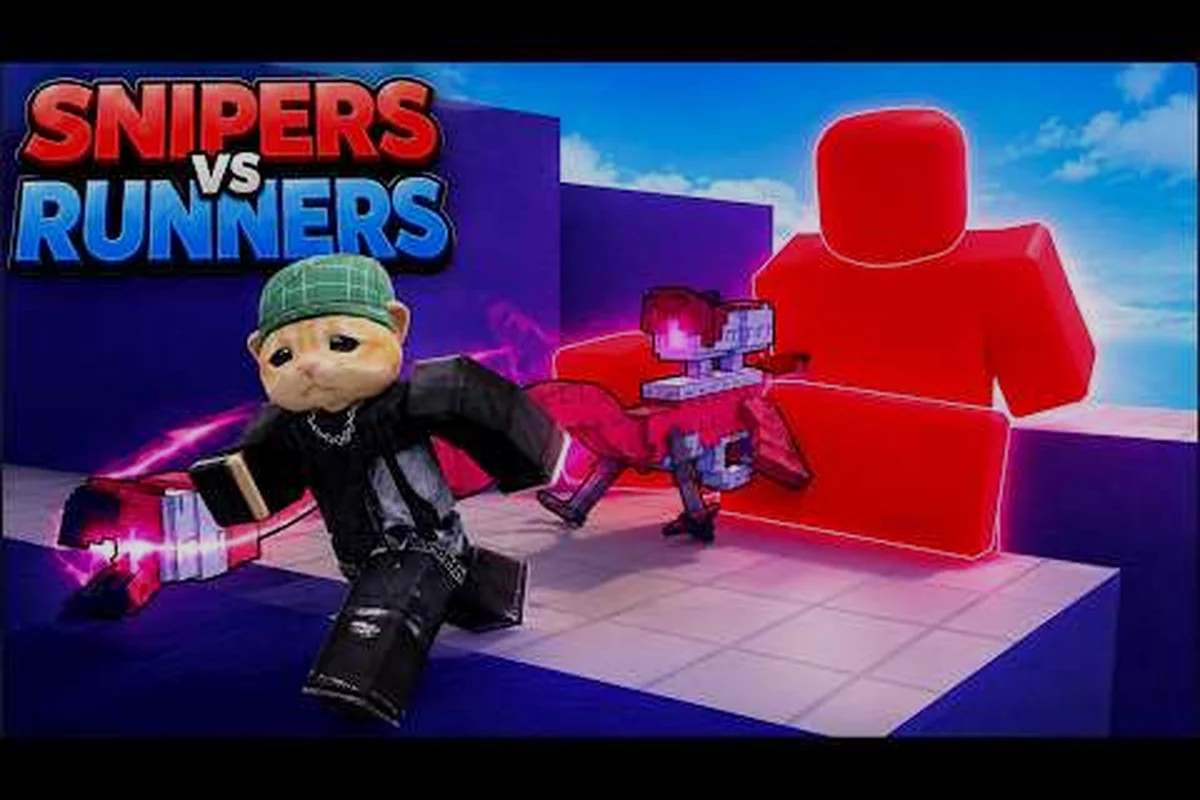
The snipers vs runners runner vs sniper matchup is a constant game of timing, and the side that manages ability cooldowns better almost always wins the round. While most players focus on raw movement or aim, the real skill gap lives in cooldown tracking — knowing exactly when your escape abilities come back online and when the Sniper's shot is ready to fire. This guide breaks down the timing math behind every ability, shows you how to bait shots without getting deleted, and gives you a practical runner checklist you can apply in your next match.
The official Snipers Vs Runners! Roblox page describes the core loop simply: "Make it to the end or DIE." But between spawn and finish line, the real game is a constant exchange of cooldowns, feints, and reads. Whether you are sprinting through open ground or holding a sightline from the center, understanding snipers vs runners ability cooldowns transforms how you approach every single engagement.
The Cooldown Economy: Why Timing Beats Reflexes
Every ability in Snipers Vs Runners runs on a fixed cooldown timer, and the best players treat these timers like a second health bar. When you know exactly when your speed burst is ready, you stop panicking and start planning. When you know the Sniper just fired, you know you have a clean window to cross open ground. This is the cooldown economy — the invisible resource that decides rounds more than raw aim ever will.
The Runner side has three core escape abilities—each with a distinct cooldown profile that fundamentally reshapes how you navigate the map’s high-risk zones. For example, a short-cooldown dash lets you bait a sniper’s charged shot near a corner, then re-engage before they can reload, while a long-cooldown teleport should be saved strictly for crossing open sightlines or escaping a flank. This timing asymmetry means you’re not just dodging—you’re dictating the sniper’s reload rhythm, forcing them to hesitate or waste a shot, which turns every 10-second window into a potential push or retreat.
| Ability | Cooldown | Duration | Best Use |
|---|---|---|---|
| Speed Burst | 8 seconds | 2 seconds | Crossing open gaps, closing distance to cover |
| Smoke Screen | 12 seconds | 4 seconds | Breaking sightlines, reviving teammates |
| Shield | 15 seconds | 3 seconds | Tanking a confirmed hit, pushing through chokepoints |
The Sniper side operates differently. Instead of multiple abilities, the Sniper relies on reload timing — the gap between shots where they are completely vulnerable. According to community testing from the RoBros gameplay footage, a Sniper's reload takes roughly 3.5 seconds after each shot. That window is your primary opening as a Runner, and it is the single most important timing number in the entire game.
Tracking the Sniper's Reload Cycle
The snipers vs runners runner vs sniper matchup hinges on reading the Sniper's rhythm. When you watch the Sniper fire and miss, you have roughly 3.5 seconds of safe movement before the next shot lands. When the Sniper hits a teammate, that same timer starts — and it is often the perfect moment to sprint through a gap while the Sniper is locked in the reload animation.
Reload tracking is a skill you build over time, but you can start practicing it immediately: after every sniper shot, count aloud to the beat of their reload animation—typically 2.5 to 3 seconds for the bolt-action—while simultaneously watching for the runner’s escape ability cooldown. This dual-timing habit trains your brain to anticipate the sniper’s vulnerable window, letting you bait a runner’s dash or smoke just as the sniper cycles, forcing them to choose between reloading and chasing. Over a few matches, you’ll instinctively know when to push, turning a reactive scramble into a coordinated punish that swings the fight in your favor.
-
Count after every shot — silently count "one, two, three" after the Sniper fires, and time your next dash to land right as the count hits three.
-
Watch for the scope glint — the Sniper's scope reflection appears about half a second before the shot, giving you a warning to juke or use cover.
-
Listen for the reload click — the audio cue for reloading is distinct, and experienced players report using it to time their pushes without even looking at the Sniper.
The carry game gameplay video shows the Sniper side of this exchange, highlighting how a good Sniper varies their shot timing specifically to break the Runner's counting rhythm. That is why you need more than just counting — you need to combine reload tracking with your own snipers vs runners escape abilities to create unpredictable movement patterns.
Baiting the Shot: How to Make the Sniper Waste Their Bullet
Baiting is the art of making the Sniper fire at a moment when hitting you does not matter. A well-timed bait turns the Sniper's strongest tool into a liability, because once that bullet is gone, you have a full reload cycle of free movement. The snipers vs runners how to bait question comes down to three core techniques: peek baiting, teammate baiting, and ability baiting.
Peek baiting is the simplest form. You step out from cover just enough to enter the Sniper's sightline, then immediately step back. If the Sniper fires, you have successfully wasted their shot. If they hold their fire, you know they are patient — which means you need to escalate to more convincing baits.
Teammate baiting is where snipers vs runners teammate coordination becomes critical. When two Runners approach a chokepoint, the first Runner can intentionally draw the Sniper's attention while the second Runner crosses. The bait Runner does not need to survive — they just need to make the Sniper commit to a shot at the wrong target.
Ability baiting uses your escape abilities as fake-outs. Popping your smoke screen and then not moving through it makes the Sniper guess which direction you went. Popping your speed burst toward one lane and then cutting back to another forces the Sniper to either fire at your decoy direction or wait and lose their positioning advantage.
Punishing a Sniper Who Commits to the Shot
The most effective bait pattern combines all three techniques into a single sequence, and the key is sequencing them around the runner’s ability cooldowns. For example, open with a sniper feint to force the runner’s escape ability early, then immediately switch to a runner’s pressure to bait the cooldown window, and finally close with a sniper’s long-range finish. This layered approach exploits the timing gaps between the runner’s dodge and the sniper’s reload, making the escape attempt predictable and punishable. When executed with teammate coordination, this sequence turns a reactive defense into a proactive trap, ensuring the runner’s escape abilities are always a step behind.
| Step | Action | Sniper Response | Your Move |
|---|---|---|---|
| 1 | Peek from cover | Sniper scopes in | Hold position |
| 2 | Pop smoke screen | Sniper loses sight | Move 2 steps left |
| 3 | Teammate dashes right | Sniper fires at teammate | Sprint through the gap |
| 4 | Speed burst to next cover | Sniper reloading | You are already safe |
This pattern works because it forces the Sniper to make a decision under pressure. When the smoke pops, the Sniper has to guess which direction you are moving. When your teammate dashes, that guess becomes a target priority problem. By the time the Sniper commits, you are already through the gap and moving to the next cover point.
Ability Cooldown Management: The Runner Checklist
Managing your snipers vs runners ability cooldowns is not just about knowing the numbers — it is about building a mental checklist that runs automatically during every match. The best Runners do not think about their abilities in the moment; they have internalized the timing so deeply that their movement naturally aligns with their cooldown cycles.
Here is the runner checklist that competitive players use to structure their approach, and it’s your lifeline when every second of cooldown feels like an eternity against a sniper’s one-shot potential. Start by tracking your escape ability’s timer in your head, not just on the HUD—call out the exact number to your team so they know when to bait a shot or push a lane. Then, sequence your cooldowns deliberately: if your dash is on a 12-second cycle, force the sniper to reload or reposition first, forcing them to waste their scope time, and only then commit to a cross. Finally, pair each ability use with a visual cue, like a flash or a fake peek, to mask the moment you’re vulnerable—this turns your checklist from a passive timer into an active rhythm that keeps the sniper guessing and your team coordinated.
-
Pre-round planning — identify which sections of the map require which abilities, and plan your cooldown usage around those sections.
-
First 10 seconds — do not use any abilities unless absolutely necessary; the Sniper is most alert at round start.
-
Mid-round assessment — check your cooldowns every time you reach a new cover point; if your speed burst is ready, you have an escape option.
-
Final push — save at least one ability for the last open stretch before the finish line; this is where most Runners die.
The snipers vs runners how to time abilities question is really about map awareness. You need to know not just when your abilities are ready, but when the map geometry gives you the best opportunity to use them. A speed burst used in the open is wasted if the Sniper has a clean sightline. A smoke screen popped in a narrow corridor is less effective than one popped at a wide intersection.
Cooldown Tracking Table
To help you internalize the timing, here is a quick reference table that pairs each ability with its optimal usage window—but remember, this isn't a static cheat sheet. The key is to read the flow of the duel: a runner’s dash is best saved for when a sniper has just scoped in and committed to a shot, not for juking at mid-range where a quickscope can still punish you. Conversely, a sniper’s escape ability shines right after a missed shot, buying time to re-chamber without giving the runner a free close-in. Keep this table handy as a baseline, then adapt it to the enemy’s cooldown habits—if they blow their gap-closer early, your window to pressure them shrinks dramatically, so you’ll want to bait that out first.
| Ability | Cooldown | Optimal Window | Common Mistake |
|---|---|---|---|
| Speed Burst | 8s | After Sniper fires | Using it too early in the round |
| Smoke Screen | 12s | At chokepoints | Popping it in open ground |
| Shield | 15s | Tanking confirmed shots | Using it preemptively |
| Sniper Reload | 3.5s | Crossing open gaps | Not tracking the timer |
Players who master this table report significantly higher survival rates, because they stop wasting abilities at the wrong moments. The shield ability, for example, is most valuable when you know the Sniper has line of sight on you and is about to fire. Using it before you even enter the sightline wastes its entire value.
Teammate Coordination: Turning Bait into Progress
The snipers vs runners runner vs sniper dynamic changes completely when you have teammates who understand the same timing systems. Solo Runners have to rely on their own cooldown tracking, but coordinated teams can create overlapping pressure that overwhelms the Sniper's ability to track multiple threats.
Snipers vs runners teammate coordination starts with simple callouts. When you see the Sniper fire and miss, call it out. When you see the Sniper reloading, call that too. These two pieces of information let your entire team push simultaneously, turning a single reload window into a coordinated advance.
The runner guide covers the basics of the Runner role, but the advanced coordination layer is where rounds are won—especially when factoring in the escape abilities and ability cooldowns that define the sniper-vs-runner matchup. Here is how a coordinated team structures their approach: instead of treating bait as a sacrificial play, the team times it against the sniper’s reload window, using a runner’s dash cooldown to draw the shot, then having a second runner push during the 2-second vulnerability gap. This turns a single escape into a staged offense, where each cooldown is a shared resource, not an individual panic button—directly applying the how-to-time-abilities checklist to every engagement.
-
Designate a bait Runner — one player whose job is to draw the Sniper's attention and absorb the first shot.
-
Stagger your dashes — do not all speed burst at the same time; stagger your abilities so the Sniper always has a moving target.
-
Trade roles mid-round — if the bait Runner dies, another Runner takes over the role; the team structure stays intact.
The Sacrificial Run Pattern
The most effective team pattern is the sacrificial run, where one Runner intentionally draws fire so the rest of the team can advance. This pattern requires the bait Runner to have excellent timing — they need to know exactly when the Sniper is likely to fire and position themselves to absorb that shot without wasting the team's momentum.
| Role | Action | Timing | Outcome |
|---|---|---|---|
| Bait Runner | Dash into open ground | Right after Sniper fires | Draws next shot |
| Team Runner 1 | Cross the gap | During reload window | Reaches next cover |
| Team Runner 2 | Cross the gap | During reload window | Reaches next cover |
| Bait Runner | Use shield if targeted | Before shot lands | Survives or dies for the team |
The sacrificial run works because it converts the Sniper's strongest tool — their ability to delete individual Runners — into a team advantage. When the Sniper fires at the bait Runner, they are not firing at the two Runners crossing the gap. When the bait Runner uses their shield, they survive the shot and the team gains even more ground.
Advanced Timing: Reading the Sniper's Mind
Beyond the basic cooldown tracking, advanced Runners develop the ability to read the Sniper's decision-making process. This is where the snipers vs runners runner vs sniper matchup becomes a psychological game rather than a mechanical one. The best Snipers do not fire at the first target they see — they wait for high-value targets or for Runners in vulnerable positions.
Sniper target priority typically follows this pattern, based on community reports: first, the sniper locks onto the runner who is closest to the escape zone, because that target poses the immediate win-condition threat. Second, they target the runner who just used their cooldown (like a dash or smoke), as that runner is now vulnerable and cannot re-engage their escape ability for several seconds. Finally, they focus on the runner who is actively baiting—the one feinting toward the sniper to draw a shot—since punishing that aggression forces the team to reset their approach. This hierarchy shifts dynamically, so runners should communicate who is "hot" (cooldown spent) to force the sniper into a slower, more predictable rotation.
-
Lead Runners — the Runner closest to the finish line is always the highest priority target.
-
Bait Runners — Runners who are clearly trying to draw fire get shot early to discourage the tactic.
-
Clustered Runners — two or more Runners in the same sightline offer a chance for collateral damage.
-
Isolated Runners — Runners who have fallen behind are easy picks but low value.
Understanding this priority list lets you predict where the Sniper is looking. If you are the lead Runner, you know the Sniper is watching your position. If you are in the middle of the pack, you have more freedom to move because the Sniper is focused on the leader.
The Decoy Cross-Reference
For Runners who want to master the psychological layer, the decoy ability guide explains how the decoy ability creates false targets that confuse the Sniper's priority system. When you combine decoy usage with the timing systems covered in this guide, you create a movement pattern that the Sniper cannot easily predict.
The advanced timing layer also involves varying your own rhythm. If you always dash at the same moment after the Sniper fires, a good Sniper will start anticipating your movement—they’ll pre-fire your escape lane or hold a charged shot for that exact beat. Mix up your timing by delaying your dash by half a second, or even faking a forward step before committing. For example, after the Sniper’s third shot, wait for their reload animation to begin, then sprint diagonally instead of straight back. This forces them to re-track mid-cycle, burning their cooldown window and opening a clean gap for a teammate’s cross-reference.
-
Sometimes dash immediately after the shot to catch the Sniper mid-reload.
-
Sometimes wait 2 seconds to let the Sniper think they have you pinned.
-
Sometimes fake a dash by starting the animation and canceling it.
These variations break the Sniper's mental model of your behavior, making it harder for them to predict your next move. The tier list guide ranks the escape abilities by overall effectiveness, but the timing variations are what separate good Runners from great ones.
Frequently Asked Questions
What is the most important cooldown to track as a Runner?
The Sniper's reload timer is the most critical cooldown in the game. At roughly 3.5 seconds between shots, this window determines when you can safely cross open ground. Track it after every shot, and you will find yourself surviving engagements that previously seemed impossible.
How do I bait the Sniper without dying?
The safest bait technique is peek baiting — step into the Sniper's sightline for a split second, then step back into cover. If the Sniper fires, you have wasted their shot. If they hold their fire, use your smoke screen to create confusion and move to a different angle.
Should I save my shield for the final stretch?
Yes, in most cases. The shield's 15-second cooldown means you will only get one or two uses per round, so saving it for the final open stretch before the finish line is usually the highest-value play. Use it earlier only when you are certain the Sniper has line of sight on you.
How do I coordinate baits with random teammates?
Use simple callouts — announce when the Sniper fires, when they are reloading, and when you are about to bait. Even minimal communication helps random teammates understand your timing. If they do not respond, focus on your own timing and use their movement as natural bait opportunities.
What is the biggest timing mistake new Runners make?
Using abilities too early is the classic mistake. New Runners burn their speed burst in the first ten seconds, leaving nothing when the Sniper reloads mid-map. Save your smoke for open crossings, and time your dash to their reload cycle—not your panic.