
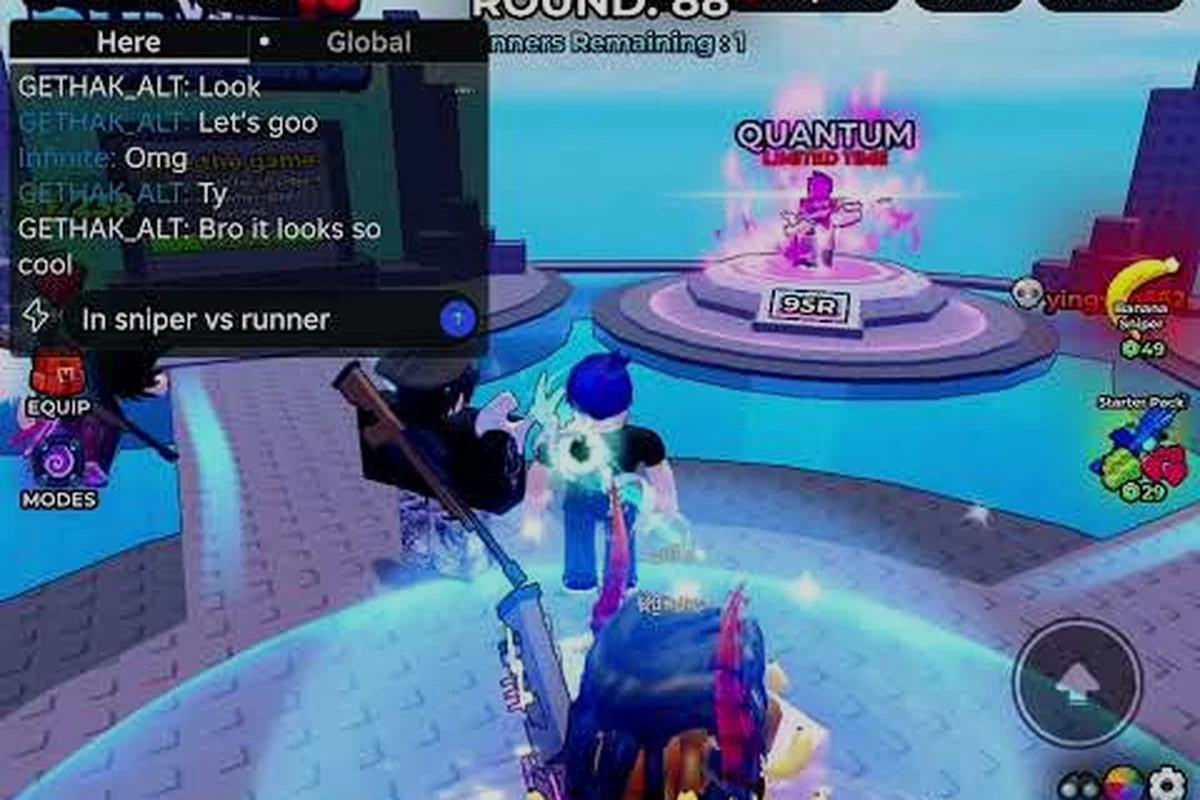
The snipers vs runners hardscope technique separates average snipers from those who consistently lock down the finish line. When you stay scoped for extended periods, you trade peripheral awareness for precision, and that trade only pays off when you understand exactly how runners telegraph their movements. Since the game's launch on May 16, 2026, the official Roblox page reports over 3.96 million visits with roughly 4.4K players online at peak hours, which means you're competing against a massive pool of runners who have already learned to punish stationary snipers. This guide breaks down when hardscoping wins rounds, how to read audio cues that give runners away, and why quick scope and no scope techniques deserve a place in your 2026 toolkit.
If you’re torn between holding a hardscope and tracking a runner, the decision often comes down to map awareness—check out our Snipers Vs Runners Scope Guide for a deeper breakdown on when to switch your focus mid-fight.
Hardscope Fundamentals: When Staying Scoped Wins Rounds
Hardscoping means holding your sniper's zoom for extended periods while tracking a lane or checkpoint. The approach gets a bad reputation because stationary snipers become predictable, but the snipers vs runners hardscope strategy remains devastating when applied to the right map sections. Runners on the official Roblox game page are described as needing to "make it to the end or DIE," which means every runner must eventually cross open ground. Your job is identifying which open ground they cannot avoid.
The key insight is that hardscoping works best at chokepoint zones where runners have limited alternatives. When you hold a sightline that covers two or three approach angles simultaneously, you force runners into a decision: challenge your scope or wait for backup. Most runners panic and sprint through, which is exactly when you pull the trigger.
-
Long straightaways with minimal cover favor hardscoping because runners cannot close distance quickly
-
Checkpoint exits create predictable movement patterns as runners regroup after respawning
-
Elevated center positions give you sightlines over multiple lanes while keeping you out of immediate danger
-
Late-round pressure forces runners into desperate plays, making them easier to track while scoped
The tradeoff is real though. While you're scoped, a runner with a smoke ability can close half the map before you reacquire them. That's why you need to pair hardscoping with sound cue awareness rather than relying purely on visual tracking. According to community reports from players who consistently top leaderboards, the best hardscope snipers never stay scoped for more than eight seconds without checking their surroundings.
Predicting Runner Movement While Scoped
Runners in this game follow predictable acceleration curves when they use their speed abilities. The moment you hear the distinct whoosh of a speed burst, you know they've committed to a straight-line push. That's your window to hardscope the most likely exit point rather than tracking their current position. Experienced snipers describe this as "shooting where they'll be, not where they are," and it's the single biggest difference between casual scoping and effective hardscoping.
Positioning for Long Sightlines
Your physical position determines whether hardscoping feels oppressive or useless. The center elevated platform on most maps offers the best balance of coverage and safety, but it's also the first place runners check. Instead, consider off-angle positions that cover the same lanes from unexpected directions. Runners who have memorized common sniper spots will pre-aim those locations, so shifting your hardscope position every two to three kills keeps them guessing.
Sniper Sound Cues: Audio Cues That Reveal Runner Positions
The snipers vs runners sniper sound cues system is more detailed than most players realize. Every ability, every jump, and every landing generates distinct audio that travels further than you might expect. When you're hardscoped and visually locked on one lane, your ears become your secondary targeting system. Players who master this dual-input approach report significantly higher kill rates because they can track runners who briefly break line of sight.
The most important sound to recognize is the footstep cadence difference between walking and sprinting. Walking runners produce slower, heavier steps that are easy to miss during combat. Sprinting runners create rapid, lighter footfalls that stand out against ambient map noise. When you hear sprinting footsteps approaching your position, you have roughly two seconds before they round your sightline — enough time to reposition your scope or prepare a quick scope shot.
| Sound Cue | What It Means | Recommended Response |
|---|---|---|
| Rapid light footsteps | Runner sprinting toward your lane | Prepare quick scope, track nearest corner |
| Heavy slow footsteps | Runner walking, likely planning ability use | Hold hardscope, watch for ability telegraph |
| Smoke canister hiss | Runner deploying smoke cover | Unscope, reposition to flank angle |
| Speed burst whoosh | Runner committed to straight-line push | Hardscope exit point, not current position |
| Double jump landing | Runner using vertical mobility | Check elevated routes, adjust scope height |
| Respawn chime | Runner just died and is returning | Scan checkpoint exits for regroup push |
Sound cues become even more valuable when multiple runners push simultaneously. The chaos of overlapping footsteps makes visual tracking difficult, but audio lets you count how many runners are approaching and roughly where they're positioned. According to gameplay footage from the RoBros YouTube channel, skilled snipers often fire at sound alone when smoke obscures their vision, landing hits on runners they never visually acquired.
Ability Audio Recognition
Each runner ability has a unique audio signature that tells you exactly what's coming. The smoke canister produces a sharp hiss followed by a soft thud when it lands. The speed burst creates a rising whoosh that peaks as the runner accelerates. The decoy generates a brief static crackle that mimics a player spawning. Learning these distinctions takes practice, but the payoff is massive because you can counter abilities before they fully activate.
Using Audio to Track Through Walls
When runners pass behind cover, their footsteps continue providing positional data. A runner who disappears behind a crate but keeps sprinting will emerge on the other side at a predictable time. By counting steps and maintaining your hardscope on the exit point, you can land shots on runners you never visually tracked through the obstacle. This technique feels almost like cheating when you first master it, but it's simply using all available information.
Quick Scope vs No Scope: When to Abandon the Hardscope
The snipers vs runners quick scope technique exists because hardscoping leaves you vulnerable during close-range encounters. When a runner closes within ten meters, your zoomed view becomes a liability because you can't track their fast lateral movement. Quick scoping — briefly zooming, aligning your shot, and firing in under half a second — gives you the accuracy of a scoped shot with the speed of an unscoped one.
The snipers vs runners no scope approach takes this further by eliminating zoom entirely. No scoping trades accuracy for maximum reaction speed, making it viable only at very close range or as a desperation move. However, the no scope has a hidden advantage: it doesn't trigger the zoom animation, which means you maintain full peripheral vision throughout the shot. This makes it excellent for finishing off wounded runners who think they've escaped your sightline.
| Technique | Time to Fire | Accuracy | Best Used When |
|---|---|---|---|
| Hardscope | 0.5-1.0s (already scoped) | Highest | Long sightlines, chokepoints, stationary targets |
| Quick Scope | 0.3-0.5s (zoom + fire) | High | Medium range, moving targets, ambush defense |
| No Scope | 0.1-0.2s (no zoom) | Low-Medium | Close range, finishing blows, panic defense |
Your choice between these techniques should depend on the engagement distance and how much time you have to react. The snipers vs runners sniper role guide approach recommends defaulting to hardscope for initial positioning, then switching to quick scope when runners close distance, and reserving no scope for emergency situations where you have no time to zoom.
Quick Scope Drills That Work
Practice quick scoping by finding a spot with predictable runner traffic and forcing yourself to unscope between every shot. This builds the muscle memory for reacquiring targets quickly. Start with stationary targets, then progress to moving runners, and finally practice quick scoping while strafing to simulate real combat conditions. Players who spend 15 minutes daily on these drills report noticeable improvement within a week.
No Scope Situational Awareness
The no scope's real power isn't the shot itself — it's what the shot enables. Because you never zoom, you maintain complete awareness of your surroundings. This lets you track multiple runners simultaneously, identify flanking attempts, and reposition quickly after firing. In chaotic FFA situations where runners swarm from all directions, the no scope keeps you alive long enough to land follow-up shots or escape to a better position.
Sniper Role Guide 2026: Building Your Complete Loadout Strategy
The snipers vs runners sniper guide 2026 landscape has evolved significantly since launch. The August 10, 2026 update introduced balance changes that shifted the meta toward more aggressive sniping styles. According to the official Roblox game page, the game now features a trading system that lets you acquire new sniper skins through crates, and some of these skins offer subtle visual advantages that affect target acquisition.
Your loadout strategy should account for both your sniper skin and your positioning approach. The snipers vs runners sniper role guide recommends building around your strengths rather than trying to cover weaknesses. If you excel at hardscoping, choose a skin with a clean reticle that doesn't obscure your target. If you prefer quick scoping, prioritize skins with minimal zoom animation delay.
-
Reticle clarity matters more than cosmetic appeal for hardscope players
-
Zoom animation speed varies between skins, affecting quick scope viability
-
Sound profile differences can alert runners to your presence
-
Color contrast against map environments affects target acquisition speed
The current meta rewards snipers who can adapt between hardscope and quick scope based on the situation. Runners have become smarter about countering stationary snipers, so the days of camping one sightline for an entire match are over. Instead, the best snipers rotate between aggressive pushes and defensive holds, keeping runners uncertain about your position.
Adapting to the August 2026 Balance Changes
The latest patch adjusted sniper reload timing and slightly reduced aim assist at long range. This means hardscoping requires more precise tracking than before, while quick scoping has become relatively stronger because the reload change affects all techniques equally. Players who relied heavily on aim assist need to practice manual tracking to maintain their kill rates.
Map-Specific Loadout Adjustments
Different maps reward different sniping styles. Open maps with long sightlines favor hardscoping and reward patient positioning. Indoor maps with tight corridors make quick scoping essential because runners close distance rapidly. The best approach is to develop proficiency with all three techniques so you can adapt your loadout and playstyle to whatever map you load into.
Advanced Hardscope Techniques: Tracking, Leading, and Predicting
Once you've mastered the basics of the snipers vs runners hardscope approach, advanced techniques push your kill rate even higher. The most important advanced skill is target leading — firing where a moving runner will be when your bullet arrives. Because sniper bullets in this game travel with a slight delay, shooting directly at a sprinting runner often results in a miss behind them. Leading your shots by a body width or two compensates for this travel time.
The second advanced technique is pre-firing predictable routes. Runners who use speed bursts commit to straight-line paths, making their trajectory predictable. When you hear the speed burst whoosh, hardscope the most likely exit point and fire as soon as the runner enters your sightline. This feels like prediction but is actually just pattern recognition based on how the speed ability works.
| Scenario | Hardscope Action | Quick Scope Action | No Scope Action |
|---|---|---|---|
| Runner sprinting straight at you | Hold scope, lead shot slightly | Fire immediately on acquisition | Only if they're within 5 meters |
| Runner using smoke cover | Unscope, reposition to flank | Track smoke edge for exit | Not viable through smoke |
| Multiple runners pushing together | Focus lead runner, then reacquire | Pick closest target, then next | Emergency defense only |
| Runner at long range, stationary | Hold scope, take precise shot | Not needed at this range | Never use at long range |
The third advanced technique is sound-based tracking through smoke. When runners deploy smoke to break your line of sight, their footsteps continue providing positional data. By maintaining your hardscope on the smoke's edge and listening for footsteps, you can fire the moment they emerge. This technique requires practice because the timing window is tight, but it consistently catches runners who think smoke makes them invulnerable.
Tracking Multiple Targets While Scoped
The challenge with hardscoping is that you commit to one sightline while runners attack from multiple angles. Advanced snipers handle this by using sound cues to track off-screen runners while keeping their scope on the primary target. When you hear footsteps approaching from behind, you know you have approximately two seconds to finish your current shot and reposition. This constant awareness separates top-tier snipers from average players.
Predicting Runner Ability Usage
Runners telegraph their ability usage through positioning and movement patterns. A runner who suddenly stops sprinting and starts walking is likely preparing to deploy smoke. A runner who jumps repeatedly is probably trying to make themselves harder to hit while closing distance. By reading these tells, you can prepare the appropriate counter before the ability activates.
Hardscope Mistakes That Cost You Kills
Even experienced snipers fall into predictable patterns that runners exploit. The most common mistake is staying scoped too long in one position. Runners who die to your hardscope will respawn and immediately check that sightline, often with a speed burst ready to close distance before you can react. The fix is simple: after every two or three kills from one position, relocate to a different angle.
The second major mistake is ignoring sound cues while scoped. When you're zoomed in, it's easy to focus entirely on visual tracking and miss the audio information that tells you about approaching threats. The snipers vs runners sniper sound cues system exists specifically to give you awareness beyond your sightline, and ignoring it leaves you vulnerable to flanks.
-
Overcommitting to one lane while runners push from multiple angles
-
Failing to unscope when runners close within ten meters
-
Ignoring reload timing and getting caught with an empty chamber
-
Standing still while scoped, making yourself an easy target
-
Using the same position repeatedly until runners learn to counter it
The third mistake is poor reload discipline. Sniper reloads take time, and if you fire without a plan for the reload window, runners will push during your vulnerability. The best approach is to fire, immediately unscope, reposition slightly, and reload while moving. This makes you a much harder target while maintaining your ability to re-engage quickly.
Recognizing When to Abandon the Hardscope
Hardscoping isn't always the right choice. When runners have multiple approach angles that you can't cover simultaneously, staying scoped leaves you exposed. When the round timer is running low and runners are desperate, they'll make unpredictable plays that are hard to track while zoomed. In these situations, switching to quick scope or no scope gives you the flexibility to react to chaos.
Learning From Deaths
Every death as a sniper teaches you something about runner behavior. When you die, ask yourself what information you missed. Did you ignore a sound cue? Did you stay scoped too long? Did you position yourself in a predictable spot? By analyzing your deaths, you'll identify patterns that you can correct in future rounds. The best snipers treat every death as a learning opportunity rather than a frustration.
Frequently Asked Questions
What is the difference between hardscope and quick scope in Snipers Vs Runners?
Hardscope means holding your zoom for extended periods to maintain a precise sightline, while quick scope involves briefly zooming, aligning, and firing in under half a second. Hardscope excels at long-range precision, while quick scope trades some accuracy for speed and flexibility in medium-range engagements.
How do I improve my snipers vs runners hardscope accuracy?
Practice tracking moving targets while scoped, lead your shots to compensate for bullet travel time, and use sound cues to predict where runners will emerge. The snipers vs runners hardscope technique improves fastest when you focus on one sightline per round and analyze why you missed each shot.
Is no scope viable in competitive play?
No scope works best as an emergency technique at close range or as a finishing move on wounded runners. It maintains full peripheral vision and fires instantly, but accuracy suffers significantly. Use it situationally rather than as your primary technique.
What are the best sound cues to listen for as a sniper?
The most important sound cues are sprinting footsteps (rapid light footfalls), smoke canister hiss (deployment warning), speed burst whoosh (committed push), and double jump landing (vertical movement). These audio signals let you track runners even when they break line of sight.
How often should I reposition while hardscoping?
Reposition after every two to three kills from the same spot. Runners who die to your sightline will respawn and check that angle, often with abilities ready to punish you. Moving keeps them guessing and stops them from building a counter-strategy around your position.